First Principle: Accountability
Leaders need accountability structures to put values into practice, especially in crisis.

I’m writing this series because I want to act from love, not fear. For my daughters, with the communities I belong to, and alongside other leaders navigating this time of collapse, whether in a nonprofit, a foundation, a government agency, or a business. The twelve principles I’ll share each month come from 20+ years of practical lessons in nonprofits and philanthropy, including the last 12 at The Solutions Project. They are what I wish I’d practiced intentionally from day one.

The first and most foundational principle is accountability. Not as jargon or ideal characteristic of leadership, but as the organizational infrastructure that holds true when everything else shakes. This piece describes what that infrastructure looks like, why it matters, and how to build it.
When the Floor Dropped Out
Let me tell you about April 2018.
In one week, I lost a third of my organization’s budget. Not because we’d failed, not because of scandal, but because of circumstances entirely beyond our control. Within days of each other, we heard from three of our biggest funders. Without coordination or common reasons, they all said that instead of the increased renewal grants we had talked about, grants of any size were at risk. I couldn’t help but imagine a conspiracy.
This was a crisis that called us to account to the mission and people we served. We had a six-month financial runway with grant renewals for our partners on the horizon and operating costs that put those commitments at risk. I called our closest grantees. I asked them directly: “Should we close? Is our work here done? Grantees in dozens of cities have won campaigns to change laws for a Just Transition to 100% renewable energy. Other intermediary funders have joined the ecosystem to advance aligned goals. Has The Solutions Project run its course?”
Every single one said no. “We need you to keep showing how it’s done. To set the standard for grassroots grantmaking and narrative change work. Buck up, buttercup. Make the hard decisions.”
So we did.
Why Accountability Needs Infrastructure
Values are internal beliefs about what we stand for. Principles are active agreements for how we put those values into practice. Our 2018 crisis made clear that organizations need accountability infrastructure: good governance, decision-making processes, feedback mechanisms, and budget practices to make accountability real rather than aspirational. This infrastructure operates at both individual and collective levels, which makes it fundamentally relational. Day to day, it means clear feedback loops, defined decision rights, and systems that function across power dynamics when the stakes are highest. Without it, even good intentions unravel under pressure.
In most organizations and especially in philanthropy, we talk about accountability without building the systems to support it. A crisis reveals that gap. The sections below describe how I built this infrastructure when I was executive director at The Solutions Project, what it looked like when it was tested, and the questions that help you assess and strengthen your own organization.
What I Learned the Hard Way
I learned the importance of accountability in 2008. I was the Chief Development Officer at Green for All then. The mission was inspiring: a green economy strong enough to lift people out of poverty. Van Jones, its founder, brought vital climate justice ideas to mainstream venues. The energy around this work was exciting and its vision of a future where all people thrive on a healthy planet shaped my life’s purpose.

One morning, a program officer at a foundation who supported us forwarded me an email. Attached was a letter from a longtime grassroots climate justice organizer, sent to the funder, about us. The message was devastating in its critique: “We’ve tried to work with Green for All. Their role as a national organization is distinct and potentially valuable. But there’s no accountability to those of us organizing in frontline communities on the ground. They’re making a promise they can’t keep.”
It was embarrassing. I called the Program Officer to share the number of people who participated in our green jobs day of action across the country and the leaders in our fellowship program. Even as I stood on good work, I was too defensive to hear or try to understand the underlying truth: there was no accountability infrastructure.
The relevance of that missed opportunity to integrate feedback became especially clear when Van joined the Obama administration as the first green jobs czar. There was huge momentum and powerful solutions entering the federal government, challenging the status quo. The opposition responded with a harsh smear campaign against Van. They also attacked the very idea of a green economy, going on Fox News with a simple question: “Do you know anyone working in a green job?” Nobody did. Our national narrative had outpaced the conditions on the ground, just as that letter signaled, and the promise of green jobs rang hollow. The vision was sound and the leadership was talented, but the accountability structure was missing. We were popularizing an idea that didn’t yet have roots in people’s day to day lives. This disconnect hurt everyone whose work was tied to that vision, including me.
Building Accountability at The Solutions Project
When I joined The Solutions Project in 2013, I saw the potential for impact. There was a bold vision for 100% renewable energy and a unique collaboration among the founders to achieve it. I also saw what was missing. No governance model or theory of change for the path to 100%. No accountability infrastructure, even to each other.
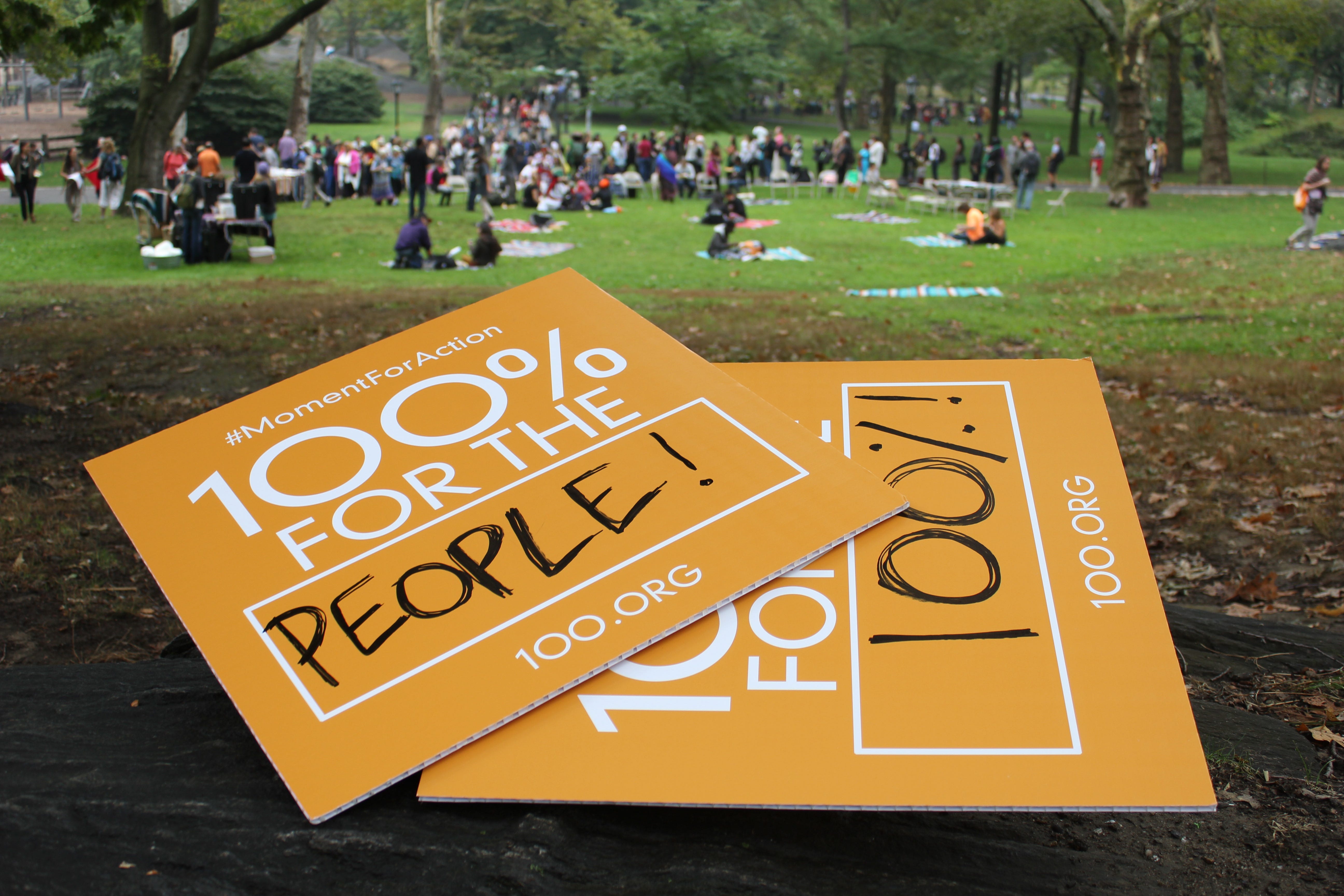
The founders began with three main pillars to promote 100% renewable energy: the power of business, science, and culture. Looking at their strengths and their gaps, I asked the board three questions: What is The Solutions Project’s role in the climate movement? Who would The Solutions Project be accountable to if it played that role well? How would the organization know if what it set out to do worked? I proposed strategy scenarios and organizational structures to make accountability real. My only goal was that they decide a path together and clarify roles, which was itself a test.
My top recommendation was to add community as the heart of the organization’s strategy, centered on building power from the ground-up and finding solutions from those most affected by the issues. I made the case that big ideas need roots in people’s lived experience. They agreed and this became the basis for everything that came after. The vision evolved to 100% renewable energy for 100% of people. I was hired as the first executive director with money to launch the field’s first climate solutions fund for grassroots organizing and a mandate to build movement accountability.
Accountability in Practice
A strong strategy requires accountability infrastructure, which means specific mechanisms built into every aspect of your work. Good feedback culture helps, but structure is what holds.
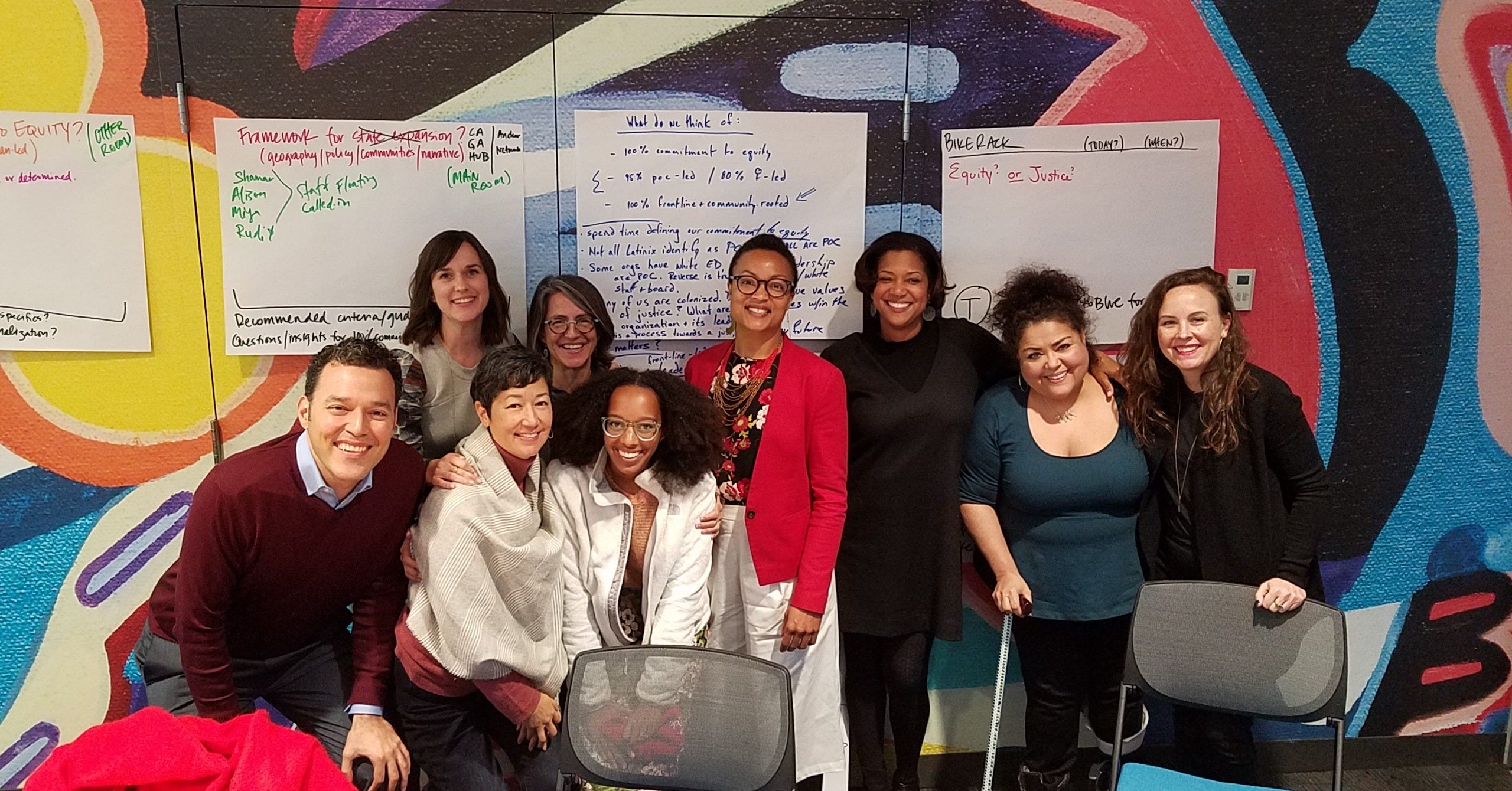
On governance: We built grassroots grantmaking as a program to ensure our national narrative strategy was connected to change on the ground. We also created a Philanthropic Trustees body, separate from the board, to govern all grantmaking decisions. Our founding trustees were key leaders on the Climate Justice Alliance’s first executive committee. They included Miya Yoshitani from the Asian Pacific Environmental Network, Lisa Abbott from Kentuckians for the Commonwealth, and Elizabeth Yeampierre from UPROSE. This overlap was intentional. Our grantmaking was shaped by leaders from frontline communities who also led the only national alliance of climate justice organizations. They grasped the opportunities and tensions in the climate justice movement and in fundraising for all the necessary components. They held us accountable to grassroots groups and to the larger movement, keeping our finger on the pulse of ground up change and making sure we added value to what our movement could achieve. They governed our programmatic impact and the board governed the organization’s overall health. As executive director, I was accountable to both, to our mission, and most importantly, to the communities we served. This accountability was structured through quarterly meetings, annual reviews, and decision-making authority. No single node had concentrated power and the board, trustees, and executive director roles advanced in alignment to our mission.
On grantmaking and evaluation: We approached our work with grassroots organizations by asking ourselves: are we being extractive or generative? Extractive practices create heavy grant reporting tasks. Grantees must prove their worth at every step. This approach often stems from a default of distrust. Generative practices involve:
Building grantee capacity through our processes, for example investing in impact research for the expressed purpose of mutual success in our fundraising and that of our grantees.
Moving resources through relationships and strategic alignment, not competition.
Using our communications to boost grantee and movement influence, not just our brand.
We did something rare at that time in philanthropy: we asked our grantees to evaluate us. They filled out confidential surveys about our transparency, processes, communications, and understanding of their capacity constraints. We published the findings every year on our website and changed our practices based on what we learned.
On narrative: Celebrity power amplified community leadership rather than replacing it. Every media moment featured community voices. Platforms fostered connections across unlikely allies rather than gatekeeping. We invested in the communication skills and tools of our grantees. We stepped in with media support when asked and spotted trends to help their stories gain attention. We also measured our impact here. A third-party narrative trends report was published annually and integrated into strategic planning. We tracked how our efforts led to a ten-fold increase in media coverage of community solutions. We also identified areas for improvement, like our media response strategy during climate disasters. These learnings inspired new initiatives and breakthroughs for our organization, grantees, and movements.
The Test of My Leadership and Our Model
Back to April 2018, when this accountability infrastructure was tested.
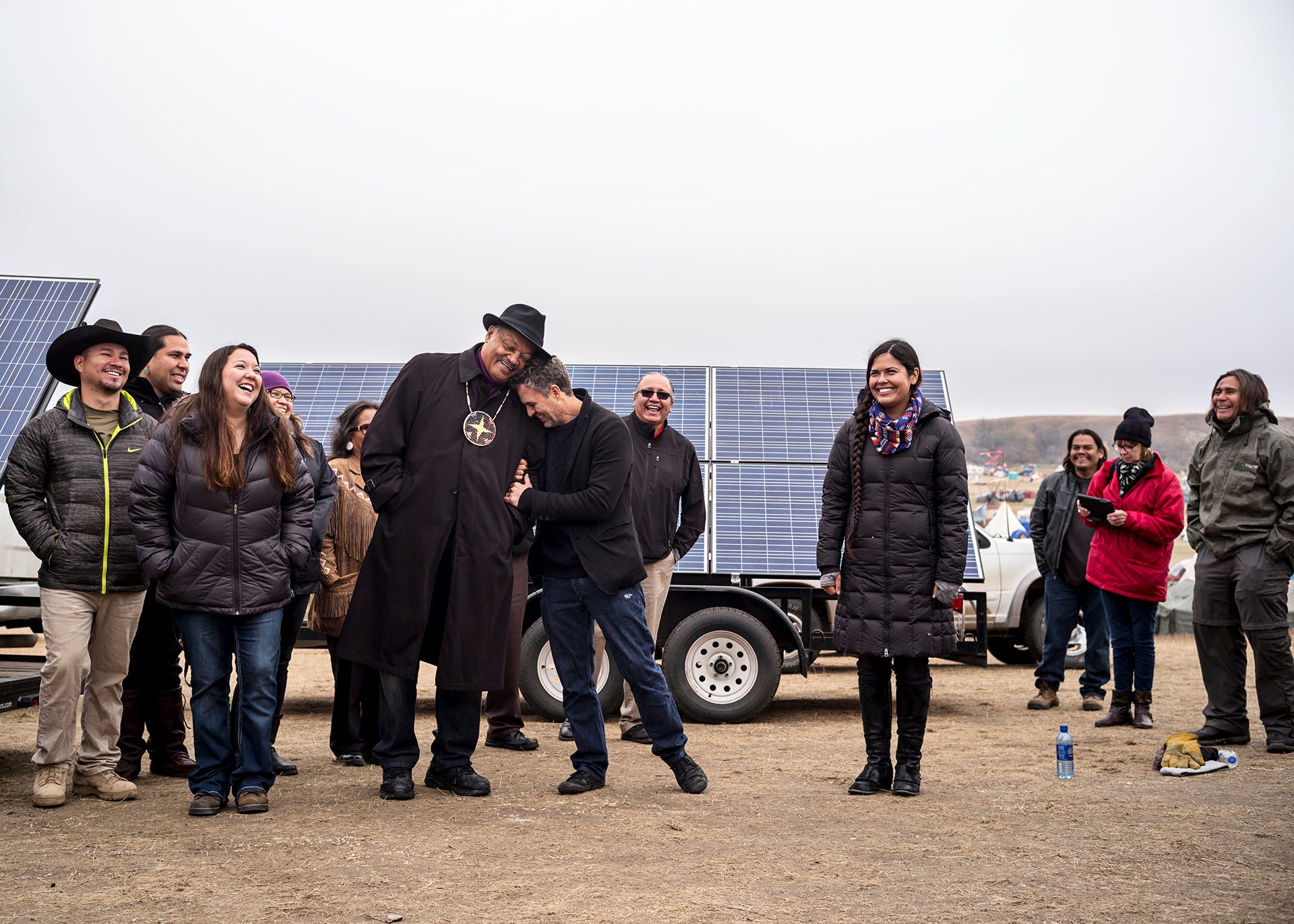
At the retreat we’d already scheduled, I brought our grantees’ message to the staff and board. We decided to contract, rebuild, and keep setting the standard. This resulted in layoffs and tough decisions about programs to cut, which the trustees helped us make. We also parted ways with some board members, including two founders. This crisis called for us to prioritize values of racial and gender justice in action, not merely in words. Our accountability infrastructure ensured that as executive director, I was taking responsibility for my part and also not driving forward alone. It ensured the board didn’t pull back from our commitments to the field or make other budget decisions that would undermine trust with grantees. It gave a north star for staff, trustees, and our remaining funders to rebuild with clarity and credibility.
While I kept my job, I lost weight, lost hair, struggled with insomnia, and internalized stress in ways that took years to recover from. Some of that cost came from my mistakes that revealed where our feedback culture and accountability structures needed improvement. Leading up to the crisis, I avoided holding internal stakeholders accountable with consequences for those who weren’t aligned or were absent when we needed them. I took the competition with peer funding intermediaries too personally. I let my anxiety and shame overwhelm me in very difficult staff transitions.
As my response to the crisis played out, our grantees held steady and the structures in place were pressure-tested in ways that bent, but didn’t break. Our accountability infrastructure allowed us to maintain every grant commitment and provide a few months’ runway to departing staff. We were able to recover some of the lost funds. I spoke directly with pivoting donors about the consequences of their actions and who appreciated learning about the best practice of tie-off grants in these circumstances. I compelled other funders to increase their support. We crystallized what we stood for: justice and impact first, before our institution or saving face. We came out stronger.
By the end of 2019, we doubled down on closing the big disparities in climate philanthropy and scaling the ground up strategy we knew worked. We gave 95% of our grants to organizations led by people of color, up from 47% before the crisis. Also, 80% of the grants would now go to organizations led by women. I made room for new leadership that would bring added strengths and reflect our commitment to racial and gender justice. We recruited Gloria Walton, one of our founding grantee partners, onto the board as part of succession planning and in October 2020, she became CEO. Our accountability infrastructure enabled the organization to secure a $43 million grant from Jeff Bezos. It received strong backing from grantees, including community labor advocates with active campaigns against Amazon. With our trustees, we moved $2 million out the door to grantees within weeks of receiving the funds, double our annual grants budget at the time. Thanks in part to The Solutions Project’s consistent support over these years, grantees won breakthrough campaigns in California and New York. Both states passed laws to accelerate an equitable transition to 100% renewable energy, growing green economies ranking among the largest in the world.
For This Moment
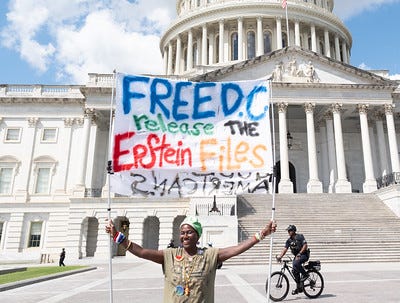
As I publish this piece, the principle of accountability is having a rare and intense moment of public attention. New evidence from the Epstein files shows the lack of accountability in our institutions. President Trump has taken unprecedented control of our federal government. Congress and the Department of Justice, once independent, are now yielding to the Executive’s demands. Just as neither they nor the Supreme Court held Trump accountable for inciting insurrection, there is no sense that the federal government will take any further action to hold accountable these perpetrators and enablers of mass sexual violence against children. On parallel track, a major player in the music industry, Casey Wasserman, who is named in the Epstein files through his suggestive emails to convicted sex trafficker Ghislaine Maxwell, was forced to sell his namesake talent agency. Without accountability infrastructure in place for this business, its clients flexed their power to make change happen anyway.
How to Build Accountability Infrastructure
If you’re an organizational leader, funder, or board member, this moment calls us to get our house in order. That starts with some honest exploration of your orientation to accountability as a practice and whether the accountability infrastructure you have in place can withstand inevitable pressure testing in the weeks, months, and years ahead. Some questions to get you started:
Who are you actually accountable to? Not aspirationally, but structurally. If the communities or people you mention aren’t in your governance structure, can’t affect your budget, and lack a say in your strategy, then you only respond to them when it’s easy. You don’t have the structure to be truly accountable when it matters.
Why are you accountable to these specific people or communities? What’s the shared purpose, the horizon you’re all working toward? Accountability without shared purpose becomes transactional and brittle. Like the key lesson from Green For All that I embedded in The Solutions Project, with shared purpose, accountability becomes the foundation for transformation, especially through crisis. A clear, shared vision for mission impact shows that operationalizing accountability is both the right thing to do and a smart strategy. Everyone has a stake.
How do you know if you’re accountable? Individual commitments aren’t enough. Stress, power dynamics, and varied communication styles can make honest feedback hard even as we cultivate feedback as a cultural norm. What processes can support accountability in relationships and within an organization? Confidential internal culture surveys and 360° feedback are great for leaders. Third-party evaluations are even better for organizations. Governance structures where those you’re accountable to have a voice and vote with balance across nodes of power are essential for impact. If people have to risk losing status, job security, funding, or access to tell you the truth, you won’t get the truth. That’s a design problem, not a relationship problem.
What does accountability actually cost you? Name the trade-offs as you reflect on your answers above. You can then identify processes to put in place across your organization during good times to help make the hard decisions when they come. As crisis hits, your choices show who you’re truly accountable to, no matter what your mission statement, core values, and strategic plan say. That clarity is hard to sit with, especially as the risks for leaders navigating a hostile federal government, volatile funding, and overwhelming needs from staff and the field grow. It’s also the clearest guide you’ll have for what supports accountability in practice now and what you need to put in place to stand strong in the future. A kitchen cabinet including a board member, peer executive director, grantee, funder, and an executive coach were critical for me to lead through crisis with accountability structures intact. It gave private, but still accountable space to process painful blowback and make amends for my mistakes.
The Stakes

Accountability is more than a buzzword. It is the infrastructure that determines whether you can meet the moment with courage and integrity. Whether you can make hard choices without destroying relationships. Whether you can heal strained relationships after a crisis subsides. Whether your big ideas run deep enough to survive any storm. Whether you act with love more often than you act from fear.
Accountability is the most basic and most radical principle. It’s what makes the others I’ll write about possible: solidarity, self-responsibility, and repair. It is the container for great learning, smart risk-taking, authentic relationship building, and good conflict. It’s the first principle because without it, none of the others can take root.
Next month: Solidarity. The difference between transactional allyship and interconnected relationship, and why that distinction matters more than ever when the ground keeps shifting beneath us.
What accountability structures exist in your organization? Where are they real and where are they aspirational? I’m curious what you’re wrestling with. Reply or comment, and I’ll respond to as many as I can.
Sarah, this really resonated. I had a front-row seat to some of this during the years we worked together, and what stands out is how you built accountability as infrastructure…not just a value.
One thing your piece made me think about: accountability has to go both ways. We’re often good at holding ourselves accountable for the mistakes, the harm, the things that went wrong. But real accountability also means owning the good: he impact, the risks taken, the progress made. You can’t have one without the other.
When leaders are willing to stand in both, that’s when accountability becomes real. Looking forward to the next piece on Solardarity!
There are many gems in this piece worth underscoring but I want to note the one at the very end — the piece about having a kitchen cabinet that overlaps with your board but is separate. I see this as the missing piece for so many of us who look to our boards for the kind of open conversation and yet in truth npo boards are rarely structured to play this role with care for the leader as a central mission. Lately this is what I’ve been trying to build into any boards I work with but I think there’s so much wisdom in having a separate set of infrastructure and for us to think beyond the npo structures.